The Tracks Quest · Story
Caravan Of Love
The Housemartins
In late 1986, four singers from Hull reworked an Isley-Jasper-Isley soul track into an unaccompanied gospel recording, with lyrics reflecting British social strains. The single reached number one in Britain and topped Sweden’s Trackslistan for four consecutive weeks from January 31, 1987.
- Year
- 1987
- Position
- #02
- Chart
- Trackslistan
How an American soul hymn turned into a winter anthem for northern bedrooms
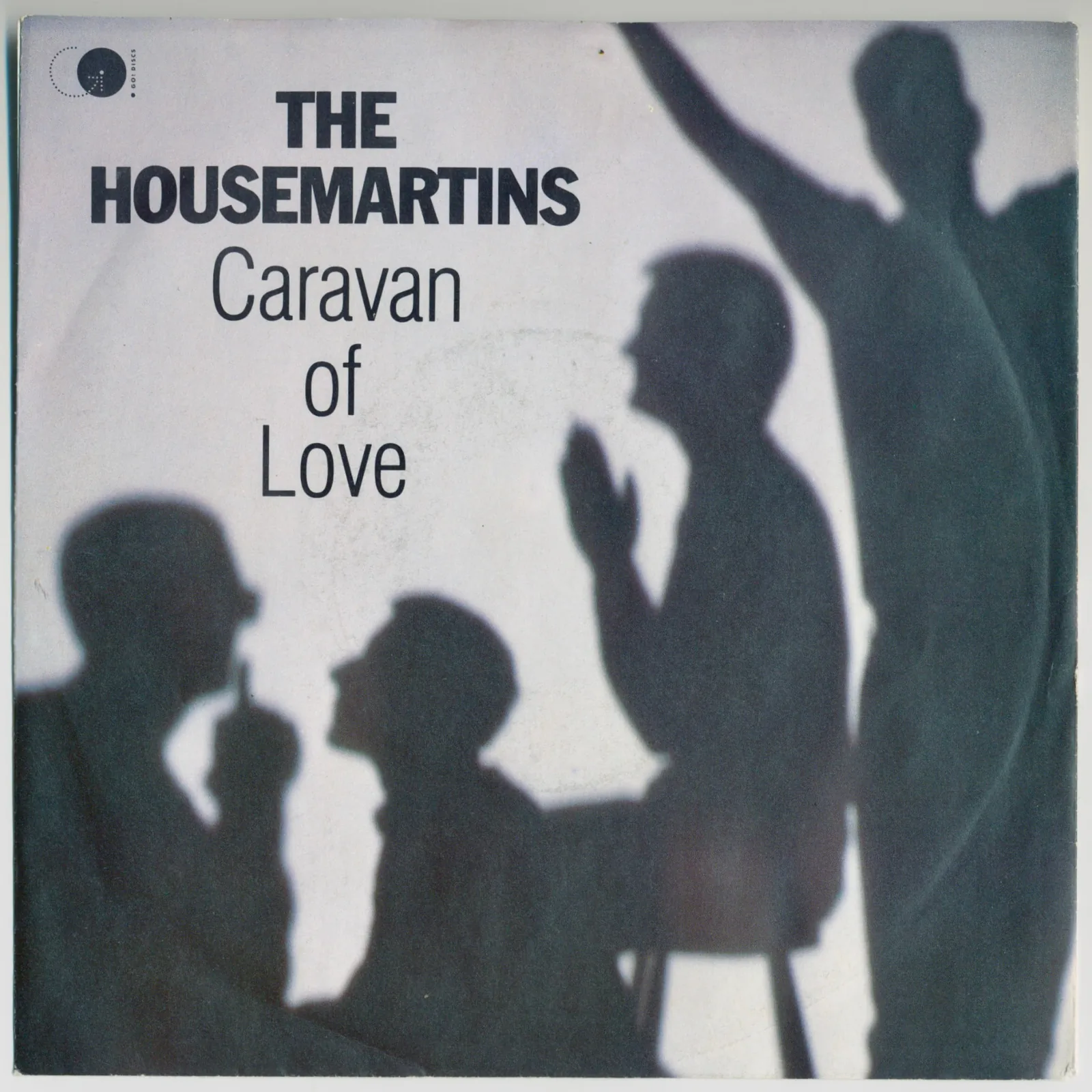
Back in late 1986, if you flipped through the fresh arrivals bin in an independent record shop, the sleeve caught you off guard immediately. Four lads from Hull stood with their heads bowed in prayer, looking less like glossy pop stars and more like awkward apprentices from down the street. The crosses shaved into their hair made them look slightly intimidating, but also completely earnest. The needle dropped on Go! Discs catalogue number GOD16, and out came pure voices, stripped bare without a single synthesizer or drum machine to hide behind.
It was an audacious move. Only a year earlier, Isley-Jasper-Isley had released the track as a five-minute slice of warm mid-eighties American R&B. Paul Heaton heard the melody and felt the vocal delivery could be taken somewhere more direct and urgent. Together with producer John Williams, the band discarded the squelchy production and reframed the tune as raw northern gospel. They kept the soul, but traded the sun-drenched streets of New York for wet bus stops, cold bedsits, and working-class solidarity.
01Rewriting the hymn for grey afternoons
Heaton also altered the words to ground the track in the realities of British life. In place of the original phrasing, the line became "the place in which we were born, so neglected and torn apart". With that simple adjustment, a broad spiritual message turned into a pointed reflection on the social strains of the era.
The delivery made all the difference. Heaton sang with a voice that was slightly fragile and strained, yet entirely committed. It sounded like someone singing by the window on an overcast December afternoon, hoping someone on the pavement below might listen. The lack of instruments gave the song an uncommon warmth, making it stand apart from everything else on the charts that winter.
“The lack of instruments gave the song an uncommon warmth, making it stand apart from everything else on the charts that winter.
Now the children of the world can see This is a better place for us to be The place in which we were born So neglected and torn apart (Torn apart)
02Conquering the radio on Saturday afternoons
The gamble paid off spectacularly. In Britain, the single climbed all the way to number one, beaten to the official Christmas top spot only by the reissue of Jackie Wilson. Over here in Sweden, the track found a massive home through the transistor radio. On January 31, 1987, it climbed to the absolute summit of Trackslistan, holding the number one spot on the program for four weeks in a row. Kaj Kindvall played it while winter frost covered the double-glazed bedroom windows, and we sat by the cassette deck waiting to hit record before the jingle faded.
Hearing four lads sing four-part harmony about togetherness made sense during those dark winter months. It was pop music made from minimal ingredients, proving that an undeniable melody and human voices can easily outshine the slickest studio tricks.
Filed under