The Tracks Quest · Story
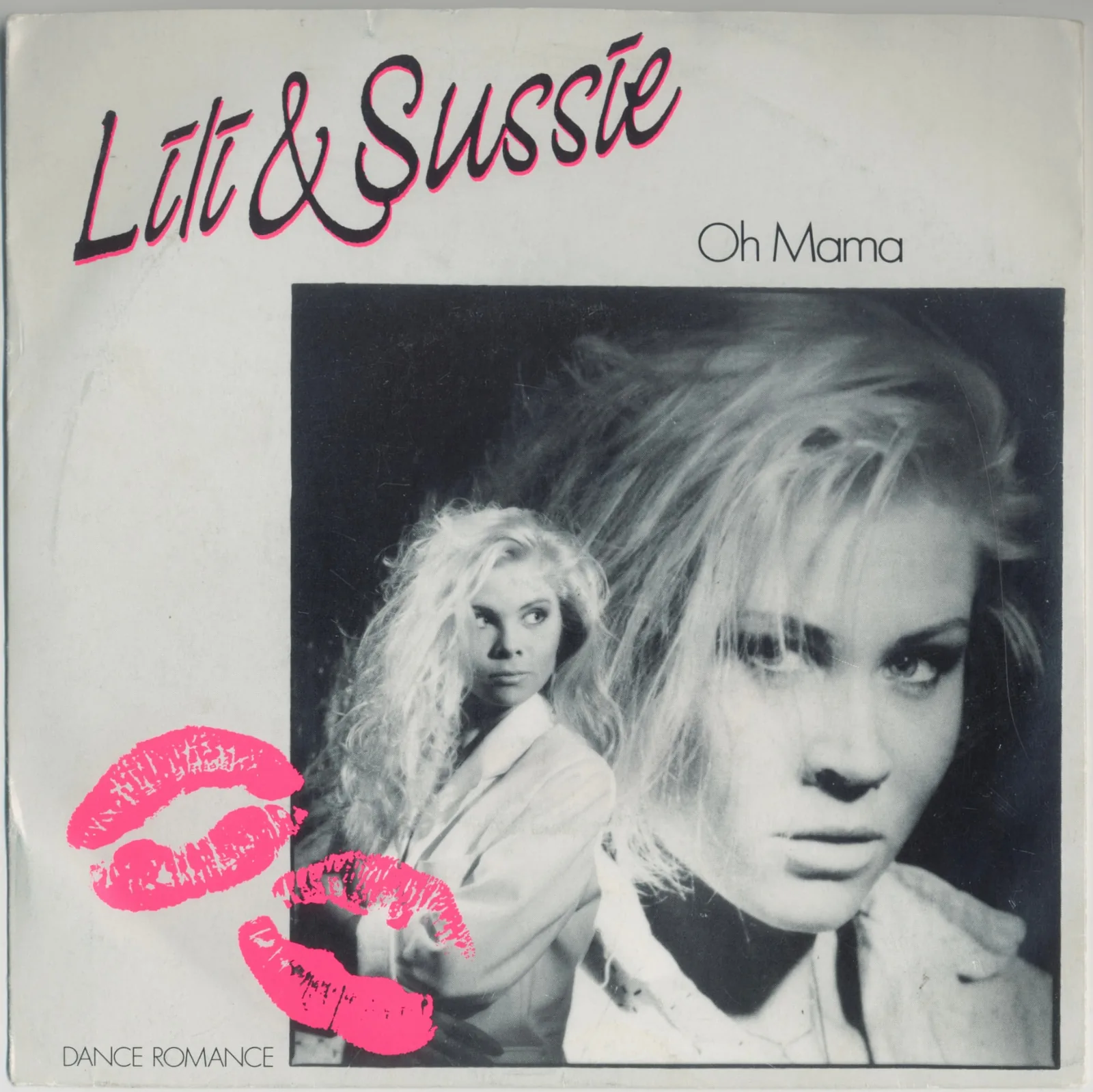
Oh Mama
Lili & Sussie
Lili and Susie’s Oh Mama evolved from Tim Norell’s eccentric instrumental demo into a Swedish breakthrough, reaching number one on Trackslistan after their 1987 Listan appearance. International opportunities faltered when the sisters declined a European television slot and performed a hard-rock showcase that sent American executives walking out.
- Year
- 1987
- Position
- #22
- Chart
- Trackslistan
The Crazy Song That Conquered Swedish Living Rooms
In the autumn of 1987, Swedish television offered very few outlets for teenage pop culture, but when Saturday evening rolled around, Listan was mandatory viewing. That was the moment everything changed for two sisters from Södermalm. Lili and Susie Päivärinta took the stage alongside dancer Ankie Bagger, and within three minutes, a bouncy synth track with an inescapable refrain had lodged itself permanently into Swedish pop consciousness.
The song started far away from the television spotlight as an eccentric instrumental demo composed by Tim Norell without any lyrics. Ola Håkansson famously dismissed it at first as toklåten, the crazy song. Yet underneath the playful tempo lay a pure pop engine. Håkansson went to work on the lyric, Anders Hansson dialed in the tight sequencer programming, and the odd studio sketch suddenly sharpened into a driving Europop anthem. Late one night during final mixing, two security guards wandered into the control room and remarked that it felt like witnessing history in the making.
01From Mediterranean dancefloors to the top of Trackslistan
The duo had already tasted dancefloor credibility across southern Europe with Candy Love, a record leaning heavily into the sunny, synthetic world of Italo disco. But Oh Mama was engineered for a broader audience. Released as the second single from Dance Romance, it quickly shot to number one on Trackslistan.
For kids listening to Kaj Kindvall counting down the votes on Saturday afternoons, the chorus was impossible to avoid. Everybody from first-graders in the schoolyard to parents doing weekend chores found themselves humming the hook. The rhythm was bright, the synthesizers were punchy, and the vocal delivery had a fearless Scandinavian energy that felt modern and homegrown at the same time.
“An even more legendary encounter occurred when American record executives flew into Stockholm to catch their showcase at Gröna Lund.
Oh, mama, can't you tell? Oh, mama, can't you tell? If he wants my love, will he ring my bell?
02Near misses and distorted guitars
The runaway momentum at home soon prompted dreams of taking the sound abroad. Looking back, the road to international superstardom was paved with delightfully stubborn missteps. Offered a spot on a major midsummer television special broadcast across Europe, the sisters chose instead to honor a small gig in Arvidsjaur.
An even more legendary encounter occurred when American record executives flew into Stockholm to catch their showcase at Gröna Lund. By that point, the sisters had fallen in love with heavier rock music. Rather than delivering the polished Europop confection that EMI had pitched, they reworked Oh Mama into a blistering hard rock version right on stage. The American executives walked out before the set ended, and contracts remained unsigned.
The underlying melody proved resilient enough to withstand almost any genre treatment. Only a year later, punk rockers Sator recorded a loud, ragged cover that revealed just how solid the underlying songwriting truly was. Whether blasted through cheap transistor radios on Trackslistan or hammered out with distorted guitars, the track remains a vivid snapshot of late eighties Swedish pop craft at its most spontaneous.
Filed under