The Tracks Quest · Story
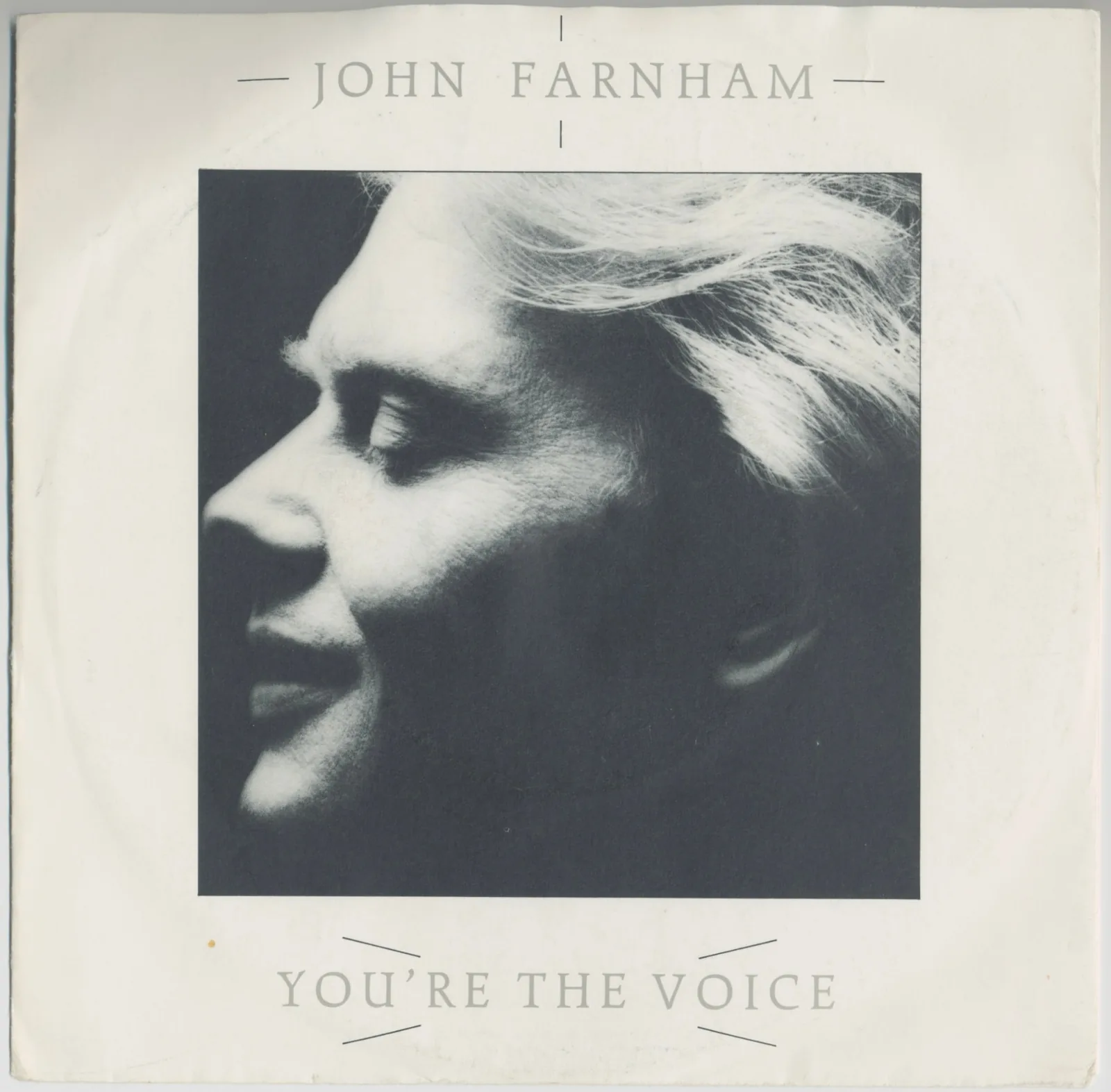
You’re The Voice
John Farnham
Born from songwriter Chris Thompson’s guilt over missing a nuclear disarmament rally, Johnny Farnham’s anti-war single emerged from the financially precarious Whispering Jack sessions. Its car-door percussion, bagpipe break and raw vocal helped carry it to the top of Sweden’s Trackslistan and Gold certification.
- Year
- 1987
- Position
- #01
- Chart
- Trackslistan
The Accidental Protest Hymn That Stormed Swedish Living Rooms
Sitting by the radio on a Saturday afternoon in the spring of 1987, hearing Kaj Kindvall announce the latest numbers on Trackslistan, very few Swedish teenagers had any idea about Johnny Farnham. To us, he appeared completely formed out of nowhere, sporting an impressive mullet and delivering what felt like the most urgent vocal performance on the planet. There was something absurdly magnetic about it. It had electronic drums that hit like concrete, an infectious chant, and then, completely out of left field, a screaming bagpipe solo. In a record collection built around European synthpop and sharp British singles, this Australian oddity demanded its own space.
The backstory is far more desperate than anyone could have guessed at the time. Farnham was completely broke in Melbourne, having sold his car and house, while his manager Glenn Wheatley famously remortgaged his home behind his wife's back to finance Whispering Jack. The track itself was born when British songwriter Chris Thompson overslept and missed a massive nuclear disarmament rally in London. Plagued by guilt, Thompson began crafting a melody about individual responsibility, eventually bringing in Andy Qunta, Maggie Ryder, and lyricist Keith Reid to shape the message.
01Car Doors and Scottish Pipes
When Farnham and producer Ross Fraser found the demo in a basement pile of two thousand cassettes, Thompson initially refused permission, still remembering Farnham as a vintage sixties novelty act. Desperation won over etiquette, and the recording went ahead anyway. Fraser leaned hard into Australia's own Fairlight CMI computer, sampling the sound of a slamming car door to create the song's unmistakable percussive crunch.
The famous bagpipe break was never part of the original blueprint either. Fraser originally imagined a pan flute, but Farnham, inspired by the thunderous bagpipe section in AC/DC's early rock catalogue, pushed for the Scottish pipes instead. That choice gave the engineers quite a headache because bagpipes are tuned to B-flat, forcing the whole production down to F. When Wheatley told Farnham his first vocal take sounded far too smooth and polished, Farnham stormed back into the vocal booth in pure anger. That furious, raw second take became the vocal print on the vinyl, full of rasp and genuine friction.
“That furious, raw second take became the vocal print on the vinyl, full of rasp and genuine friction.
We're all someone's daughter We're all someone's son How long can we look at each other Down the barrel of a gun?
02From Radio Obscurity to Swedish Gold
The reaction back home was slow at first, but once Swedish listeners got hold of it, the single soared straight to the top of Trackslistan and earned a Gold certification. Listening to the single today, you realize why it crossed borders so effortlessly. It managed to wrap serious anti-war sentiment in massive pop dynamics without getting dragged down by preachy self-importance. Dropping the needle onto the grooves of that European 7" forty years later, the energy remains completely undeniable.
Filed under