The Tracks Quest · Story
Manchild
Neneh Cherry
Neneh Cherry’s May 1989 single Manchild grew from an accidental seven-chord progression on a home Casio into a blend of hip-hop beats, strings and soul. Its domestic imagery challenged pop conventions, while European chart success contrasted with US radio resistance rooted in racial categorisation.
- Year
- 1989
- Position
- #42
- Chart
- Trackslistan
How Neneh Cherry Broke Pop Radio with a Home Keyboard
When Neneh Cherry released the seven-inch single of Manchild in May 1989, pop radio was caught completely off guard. Fresh off the brash, gold-plated energy of Buffalo Stance, she followed up with something far stranger and infinitely deeper. The track began quite simply on a home Casio keyboard using an auto-chord feature. By accident, Cherry stitched together an unorthodox progression of seven distinct chords in the verse alone, a structure her stepfather, jazz pioneer Don Cherry, immediately praised for its instinctive sophistication.
Collaborating with producer Cameron McVey alongside Bristol culture pioneer Nellee Hooper and Robert Del Naja from Massive Attack, Cherry turned those domestic beginnings into a masterpiece. The song wanders effortlessly across unrelated keys, feeling like a rollercoaster that threatens to fall apart while remaining completely hypnotic. Lyrically, it tackles an immature partner slipping away, delivering a compassionate yet firm reality check without a trace of generic sentimentality.
01Domestic Realism on the Turntable
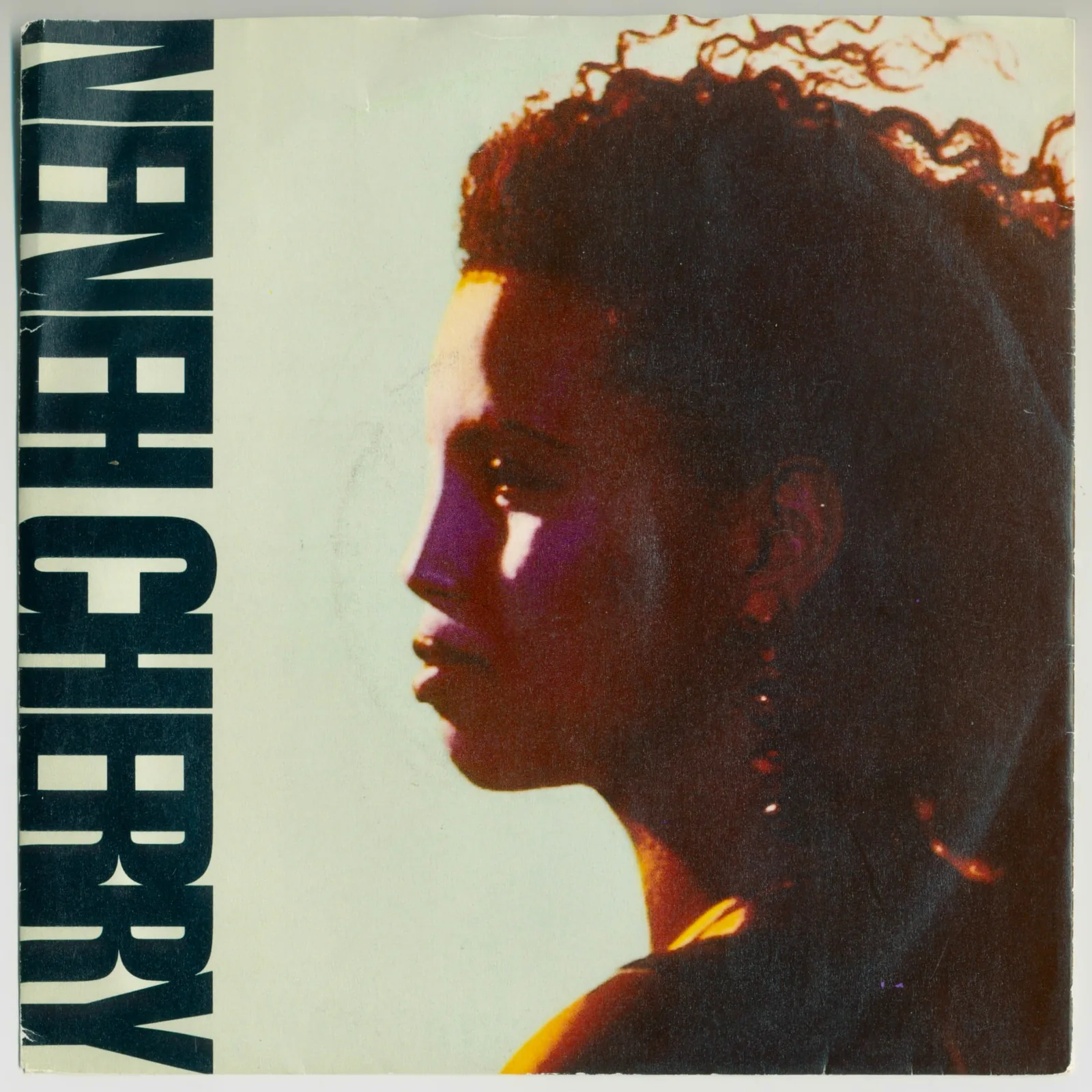
The visual identity surrounding the release captured that same refusal to play the standard pop game. French director Jean-Baptiste Mondino designed the visuals and shot the celebrated music video, which earned a nomination at the Brit Awards. The inspiration struck Mondino while sitting in his car outside Cherry's house, watching a neighbour hang laundry in the backyard.
Cherry appeared on screen as she genuinely lived, a working mother surrounded by her daughters, stepson, and close friends. In an era where female stars were expected to be manicured and unattached, seeing Cherry on television with complete domestic honesty was revolutionary. On vinyl, backed with the original mix, the grooves capture a warm, analogue weight that major studio pop had largely abandoned by the close of the decade.
“The commercial path of Manchild revealed a fascinating transatlantic divide.
Manchild, will you ever win? Manchild, look at the state you're in Manchild, he will make you cry
02The European Triumph and Trackslistan
The commercial path of Manchild revealed a fascinating transatlantic divide. In the United States, radio programmers notoriously struggled with her sound, claiming she was either too white for black stations or too black for white stations, leaving the single unplaced on North American charts.
Europe and Scandinavia, however, understood the assignment completely. In Sweden, her homeland, listeners embraced the track enthusiastically, pushing it into the upper reaches of the charts. On Saturday afternoons, Kaj Kindvall played Manchild into Swedish living rooms on Trackslistan, where its blend of hip-hop beats, sweeping strings, and soulful melodies felt entirely natural. Cherry would go on to melt down one of her subsequent music awards to make jewelry, but on Manchild, she had already struck gold by discovering the artistic blueprint that defined her career.
Filed under